
The short answer: Four checks come before adding AI in staffing operations on Bullhorn: the records it reads, the workflow step it changes, the owner of its output, and the legal duties it triggers. The fourth has a deadline. In New York City, an AI tool that screens candidates needs a bias audit and 10 business days’ notice first.
Written for staffing executives who run their firm on Bullhorn and are deciding on an AI addition. This covers the checks to run before launch. It is not a guide to tool selection, and it is not legal advice.
In New York City, a staffing firm screening candidates with an automated tool needs three things first: a bias audit within the past year, a public summary, and 10 business days’ notice. That is Local Law 144, which the city’s Department of Consumer and Worker Protection has enforced since July 5, 2023. Its 2023 guidance is blunt about who answers for it: “Employers and employment agencies are ultimately responsible for ensuring a bias audit was done before using an AEDT.” Not the tool’s maker. The agency. Yet in Bullhorn’s 2026 GRID report, 20% of firms say they lack a clear plan for implementing AI, so a duty like this can arrive before the plan does.
That is one check, in one city. It is also the right model for the other three, because it asks what using a tool makes you responsible for, not whether the tool is any good. Newbury Partners’ announcement of its partnership with Bullhorn on Bullhorn Amplify puts the work in the same order: data is prepared, workflows are designed and each team member is trained before the AI goes live. Ask your leadership team who would answer if a client challenged a submittal drafted by AI next week. If nobody names the same person, start with check three.
This guide covers why the checks come before the tool, the records and the step, who owns the output, the legal duties, and what to track in the first 30 days. It draws on Bullhorn, Staffing Industry Analysts, Census Bureau and Gartner data and on city and state sources. The four checks and the three tracking numbers are this guide’s own construction.
Why Do the Checks Come Before the Tool Choice?
The checks come first because the tool is rarely what stops AI in hiring. In a ManpowerGroup survey of 80 executives and talent acquisition leaders in the US and UK, 55% cited data readiness limits and 55% cited governance and compliance concerns. Staffing Industry Analysts reported it in June 2026. Both are checkable before launch.
The sample is small, so treat it as a signal rather than a benchmark. The same survey found nearly 40% saw a significant effect on efficiency in their hiring processes, while only 5% called the impact transformational. Adoption challenges topped the list, at 58%.
Bullhorn’s 2026 GRID report, built on nearly 2,300 recruitment professionals, points the same way. Only 10% of firms report AI embedded throughout their workflow, fewer than half use AI for any single recruitment function, and 20% say they lack a clear plan for implementing AI at all. Bullhorn names the barriers in its GRID press release: data readiness, security and unclear implementation strategies. A better tool fixes none of them.
The pattern is not unique to staffing. In Gartner’s 2026 survey of 1,303 respondents at organizations with at least $50 million in revenue, only 22% had scaled AI across multiple business units or adopted an AI first approach. Newbury Partners argues that AI implementation usually fails after the purchase decision. The platform is not the question. The operation around it is.
Checks One and Two: The Records It Reads and the Step It Changes
The first two checks are about your operation, not the AI: the records it will read and the one workflow step it will change. Most firms start near search: in Bullhorn’s GRID report, 54% have automation in place for candidate search, with lower shares for payroll and billing. Scope each check to one step. A check of the whole database never finishes.
1. The records it reads
The counterintuitive detail is that a clean database is not the goal. The goal is that the records one AI use will touch are true enough to act on. An AI step reads the record, not anyone’s intentions. A candidate saved twice gets contacted twice. A status nobody has touched since spring reads as available. A pay rate typed into a note is invisible to anything that calculates.
None of that is a platform problem. It is configuration and habit, and it was tolerable when a person read every record before acting on it. A monthly data health check is built to find exactly these patterns. Once a step acts without that human read, every inconsistency becomes an action.
2. The one step it changes
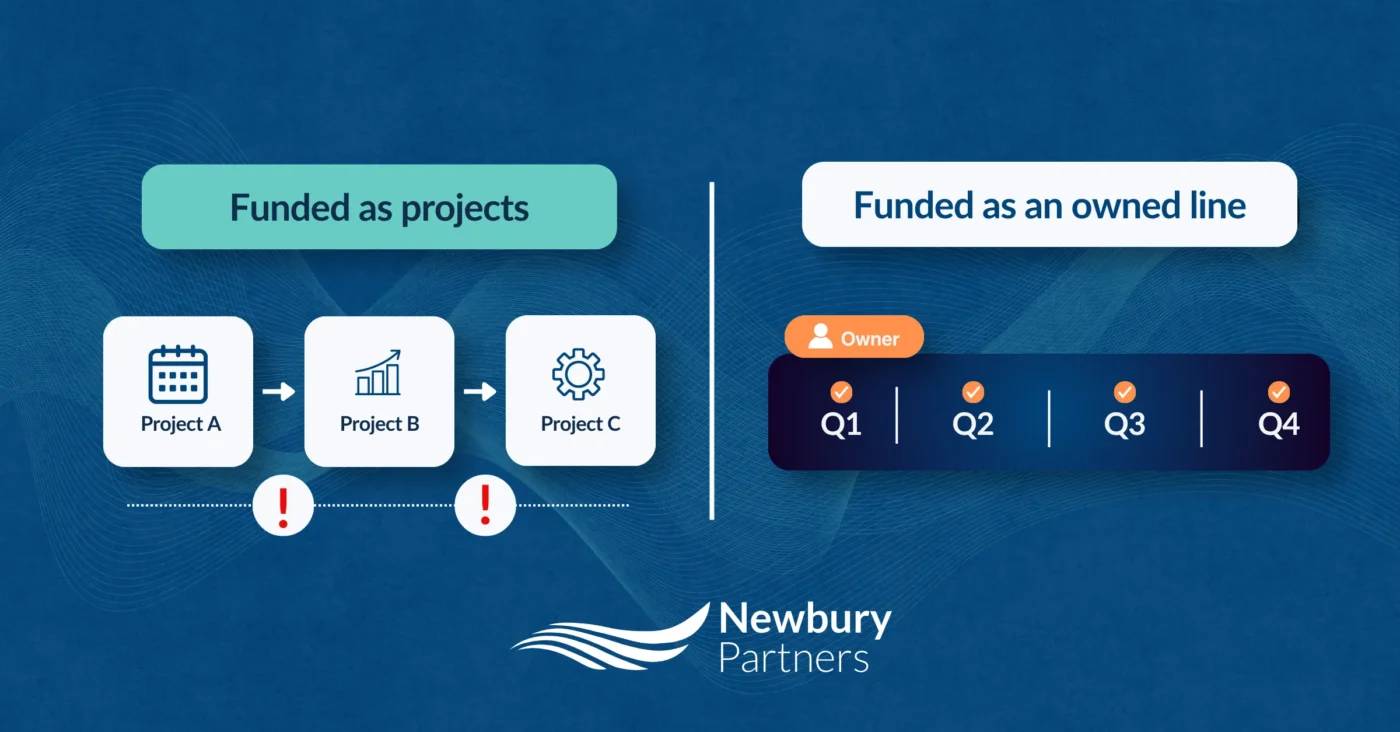
Name one step, such as screening inbound applicants for one desk or drafting submittal summaries. Write down who does it today, what they read and what they decide. That is the baseline the AI step replaces, and it is what you will measure against later. Newbury Partners’ guide to acting on a readiness assessment makes the same call: name a workflow and an accountable owner before choosing any tool.
An AI shortlist offers a contractor marked available since spring. Have someone pull 20 records it reads and check status and pay rate. All 20 should match what the recruiter knows. Each mismatch becomes a wrong call made at speed. Found several? Talk it through with us.
Check Three: Who Owns What the AI Produces?
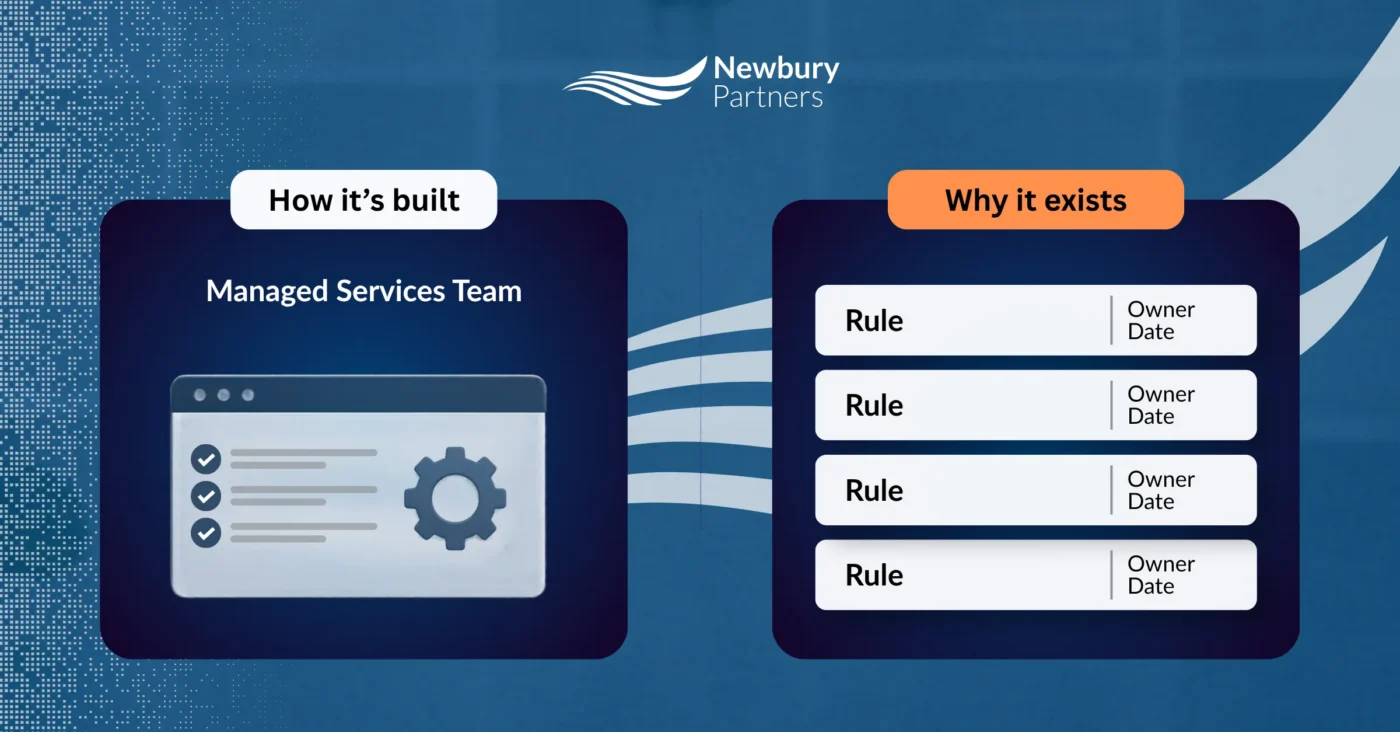
Every AI output needs one named person at your firm who answers for it, because clients and regulators both look to the firm. If a screening result or a submittal is challenged, the question is who signed off, and “the tool” is not an answer.
That gap is easy to miss from the top. Bullhorn’s GRID report found 71% of leaders feel ready to lead their firms through AI transformation. Readiness at the top does not name an owner at the desk.
The table pairs common AI uses on a Bullhorn desk with the owner this guide would name. It is an illustration, not a client’s setup.
| AI use | Owner | What the owner signs off |
| Screening or ranking applicants | The desk’s recruiting manager | Which candidates move forward, and why |
| Drafting submittal summaries | The recruiter who submits | Every fact sent to the client |
| Matching contractors to open orders | The account manager | Which matches get offered |
| Updating candidate statuses | The recruiting operations lead | Which status changes stand |
The owner works because it is the person who would be asked first if the output were wrong. New York City’s 2023 guidance applies the same logic: the maker of a screening tool is not responsible for its bias audit, the employer or agency is.
The play that is easy to miss is naming owners for the AI already in use. In the Census Bureau’s March 2026 survey, about 56% of US workers said they had used AI at work for at least one of 11 tasks. About 32% said they had used it to write communications or documentation. Some of that is already on your desks. Give it an owner too.
List the AI tools touching candidates on your desks and write one owner beside each. Every line should carry a name. A blank means nobody answers when a screening result is challenged. Stuck on one? Ask us what we would check.
Check Four: The Legal Duties That Arrive With a Screening Tool
The fourth check is the only one with a calendar attached, because some AI uses trigger legal duties before the first candidate is screened. New York City requires a bias audit within one year before use and notice 10 business days ahead. Colorado’s new rules start Jan. 1, 2027. Ask counsel which apply to you, early.
New York City. The city’s 2023 FAQ covers jobs based in a city office, remote jobs tied to one, and employment agencies located in the city or using a tool for those jobs.
Illinois. Public Act 103-804, in effect since Jan. 1, 2026, prohibits employers from using AI in employment decisions in a way that discriminates against protected classes, and requires notice when AI is used. The Department of Human Rights proposed rules on that notice and took comments until June 29, 2026.
Colorado. SB26-189, signed May 14, 2026, replaced the state’s 2024 AI Act. From Jan. 1, 2027, employers using covered automated decision tools in consequential decisions must give notice before use, send a notice within 30 days of an adverse decision, and offer correction and human review on request. The attorney general enforces it, with penalties of up to $20,000 per violation.
California. The Civil Rights Council’s regulations on automated decision systems in employment took effect Oct. 1, 2025, under the state’s Fair Employment and Housing Act.
Here is the math on getting the first one wrong. Under Local Law 144, each day a tool is used without a valid audit is a separate violation: up to $500 for the first, and $500 to $1,500 for each one after. One screening tool used for 20 business days without an audit can reach $29,000 ($500 + 19 × $1,500). Each missed candidate notice is a separate violation on top of that. Newbury Partners’ compliance checklist covers the wider audit.
- List every AI use that screens, ranks or scores candidates. Those are the uses these rules reach first.
- Map each use to where its jobs and candidates are. City and state rules follow job locations and residents, so one desk can carry two sets of duties.
- Set the dates before launch. The audit date, the notice date and the next audit date go on the calendar with the owner’s name beside them.
Once the dates are set, let the system carry them: date the audit, send each notice on schedule and flag when the next audit is due. The decision about a challenged result stays with the owner from check three.
Speed raises the stakes. In Bullhorn’s GRID survey, a global sample, 46% said AI cut screening time in half or better. That is the gain, but it also means more candidates pass through the tool, and each one sits inside its legal duties. Confirm with counsel which of these rules apply before launch, not after.
What to Track in the First 30 Days After Launch
Track three numbers in the first 30 days: the override rate, the record fix count and sign off coverage. Each is countable from the step itself. In Gartner’s 2026 survey, high performers, the organizations that regularly track returns, reported positive returns on 81% of their AI initiatives. Tracking comes first. Start counting on day one.
The override rate is the share of AI outputs the owner changed or rejected. The record fix count is the number of records corrected because the AI acted on them wrongly. Sign off coverage is the share of outputs sent to a client or candidate with the owner’s sign off logged. No public benchmark sets targets for any of the three, so your first week of counts becomes the baseline. Newbury Partners’ piece on AI and data quality sets out a data audit to run before AI goes live, which gives the record fix count its starting line.
- Overrides high, record fixes high. The records were not ready; go back to check one for that step.
- Overrides high, record fixes low. The records are fine and the step is wrong; revisit check two.
- Sign off coverage under 100%. Ownership is not real yet; check three is not finished.
- All three steady for 30 days. Widen to a second step, and run the four checks again for it.
Frequently Asked Questions
What AI tools support staffing at scale?
Tools that work inside the applicant tracking system tend to scale further than ones run beside it. In Bullhorn’s 2026 GRID report, 78% of firms with revenue growth of 25% or more use AI built into the ATS. Among firms whose revenue fell more than 10%, the share was 51%. That is an association, not proof of cause.
What is an automated employment decision tool?
New York City defines it as a computational process, derived from machine learning, statistical modeling, data analytics or AI, that helps make employment decisions. It must substantially assist or replace discretionary decision making. Screening and ranking tools are the common examples.
Does New York City’s AI hiring law apply to staffing agencies?
Yes. The city’s 2023 FAQ says the law prohibits employers and employment agencies from using such a tool in the city unless a bias audit was done and the required notices were given. The duty sits with the agency, not with the company that built the tool.
How many staffing agencies use AI?
Most now use some. The American Staffing Association, citing StaffingHub’s 2025 State of Staffing Report, puts AI adoption at 61% of agencies, up from 48% in 2024. The most common uses were conversational AI, at 55%, and résumé parsing or database cleanup, a single category, at 45%.
Why do AI pilots stall before they reach the whole firm?
Newbury Partners’ reading is that pilots stall on the operation, not the tool: unclear ownership, unreconciled records and a pilot that never joined a live workflow. Its AI enablement guide puts the hardest part in execution, after readiness.
The Tool Is the Last Check, Not the First
AI in staffing operations runs on your records, steps, owners and legal duties. The firms that get value from it settle those four before they compare providers’ demos. Can your team name the step, the owner and the audit date? Then choose the tool.
Which AI uses to add, and who owns each one, is your firm’s call. Newbury Partners’ AI readiness and leadership work covers a readiness diagnostic with a roadmap for the first 90 days, data cleansing and preparation, AI governance oversight and team enablement, within its wider staffing technology services. If you would like a second read on the four checks before you choose a tool, start with a conversation.
References
- “Automated Employment Decision Tools (AEDT).” New York City Department of Consumer and Worker Protection. Undated (enforcement from July 5, 2023). Verified live October 26, 2026.
- “Automated Employment Decision Tools: Frequently Asked Questions.” New York City Department of Consumer and Worker Protection. Published June 29, 2023. Verified live October 26, 2026.
- New York City Administrative Code, Title 20, Subchapter 25 (Local Law 144 of 2021). Penalty provisions. Verified live November 11, 2026.
- “Nearly 40% Use AI in Hiring, Though Fewer See ‘Transformational’ Impact.” Staffing Industry Analysts (reporting a ManpowerGroup survey). Published June 29, 2026. Verified live October 26, 2026.
- “2026 Recruitment Industry Trends Report.” Bullhorn. Last modified March 20, 2026; no publication date shown. Verified live November 11, 2026.
- “Bullhorn GRID Report: Staffing Firms Using AI See Stronger Growth, Faster Placements.” Bullhorn. Published February 25, 2026. Verified live October 26, 2026.
- “Gartner Survey Finds Only 22% of Organizations Have Successfully Scaled AI Across Multiple Business Units.” Gartner. Published September 1, 2026. Verified live October 26, 2026.
- “About a Third of Workers Who Used AI in the Last Week Said They Completed Tasks One to Two Hours Faster.” US Census Bureau. Published August 11, 2026. Verified live October 26, 2026.
- “Artificial Intelligence in Employment.” Illinois Department of Human Rights. Updated May 19, 2026. Verified live November 11, 2026.
- “Colorado Amends Its Artificial Intelligence Law, Substantially Reducing Obligations on Employers.” Littler. Published May 15, 2026. Verified live November 11, 2026.
- “Summary of Legislation 2026: Information Technology and Artificial Intelligence.” Colorado Legislative Council Staff. Undated (2026 session). Verified live October 26, 2026.
- “California Adopts New Employment AI Regulations Effective October 1, 2025.” Mayer Brown. Published September 2, 2025. Verified live November 11, 2026.
- “Top 5 Staffing Trends to Watch for 2026.” American Staffing Association (compiling StaffingHub’s 2025 State of Staffing Report). Published January 6, 2026. Verified live October 26, 2026.