The short answer: Bullhorn improvement keeps coming back as one more project because no single executive owns its budget. The fix: name one owner, give that person a standing amount, and have them report what changed each quarter. With 75% of CFOs in a Gartner survey expecting technology budgets to rise in 2026, the money is moving. The question is who directs it.
Written for staffing executives who run on Bullhorn and set their firm’s technology budget. This covers who should own ongoing improvement spend and how that owner works. It does not cover pricing or accounting treatment.
Staffing Industry Analysts now expects the US staffing market to grow 2.4% in 2026, to $183.1 billion, after raising its estimate from 0.8%. It is the industry’s first growth in three years. That makes 2027 planning a more open conversation than the last three years allowed, and every function will arrive with a request. The question is which requests have someone to defend them.
Technology improvement is the request with no natural sponsor. IT keeps the system running, operations feels the friction, finance signs the check when asked, and the admin who understands the setup holds it together, often at a hidden admin cost. None of them is named as the owner of making it better. Newbury Partners’ guide to continuous improvement already argues for a defined ownership model, because scattered fixes and unclear ownership travel together. Try this: ask your leadership team who would defend the Bullhorn improvement line in next year’s budget. If the answers differ, the line has no owner yet.
This guide covers who owns the budget once the system is live, what that owner’s job is, and why unowned improvement turns into projects. It then sets out how to make the change in 2027 planning and what the owner should report each quarter. It draws on SIA, Gartner, Bullhorn and WalkMe data. The owner’s job, the comparison and the quarterly numbers are this guide’s own construction.
Who Owns the Bullhorn Budget Once the System Is Live?
Technology money is split by design, and ownership after launch tends to fall between functions. In a Gartner survey run in late 2021, 74% of technology purchases were funded at least partly by business units outside IT, and only 26% were funded entirely by IT. Of respondents using shared funding, 75% reported delays.
Those delays came from the groups involved struggling to agree on how to split the budget. The survey covered 1,120 managers at organizations in North America, Western Europe and Asia/Pacific. It is several years old, it is not specific to staffing, and it measured purchases rather than upkeep. The pattern still fits a staffing firm’s ATS. The launch had a sponsor and a budget. After it, the work splits across people who each own a piece. Recruiting leaders want a workflow changed, finance wants commissions right, and an operations lead fields the complaints.
Ownership after launch matters because the platform keeps moving. Bullhorn numbers its 2026 releases by month; 2026.8, for example, was the August release. Its 2026 usage report says Bullhorn invests more than $45 million a year in research and development specific to the industry. A setup that has to keep fitting both the business and the platform needs someone whose job is keeping it fitting.
The same report puts the rest plainly: “The ATS is the same, but configuration differs across specialties.” The platform is not the gap. The configuration belongs to your firm, and so does the budget that keeps it current as the business changes around it. That needs an owner.
The Owner’s Job: One Backlog, One Amount, One Quarterly Report
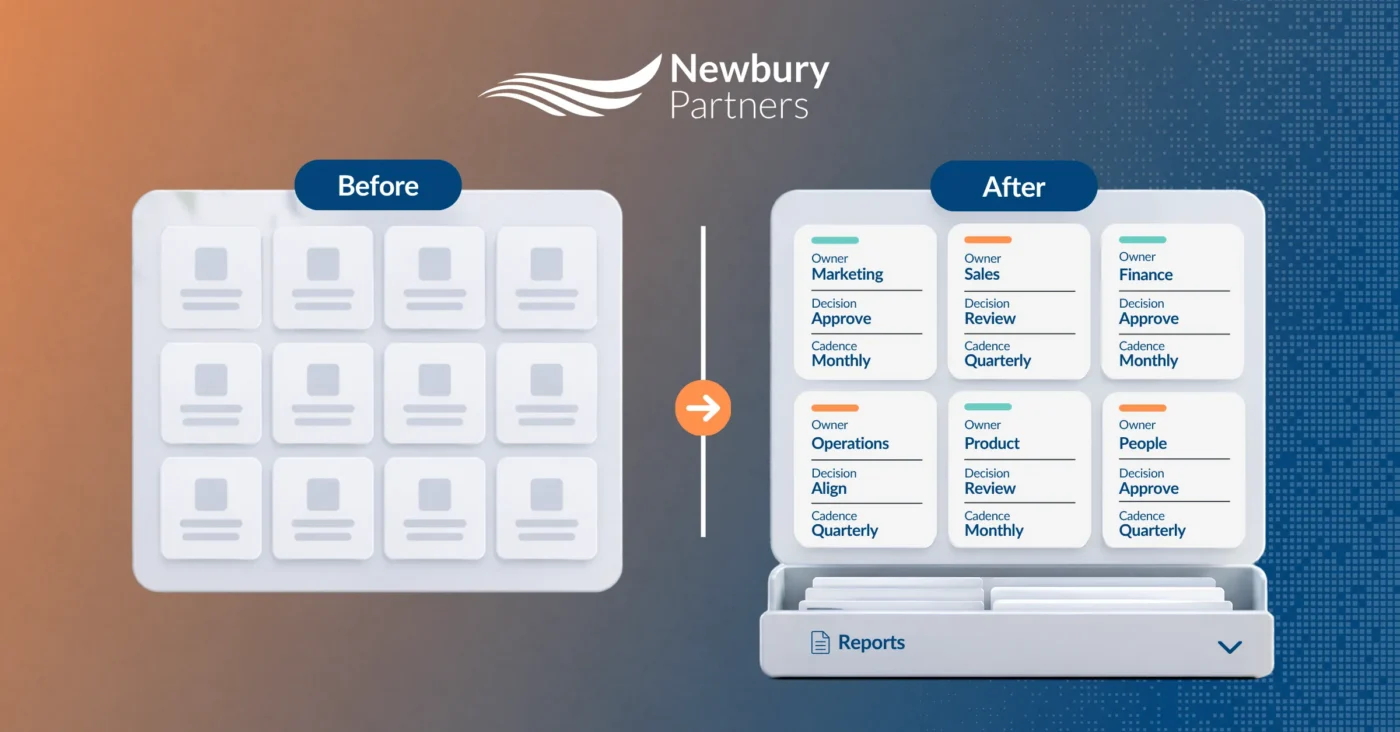
The owner’s job rests on three things: one backlog of every improvement request, one standing amount to spend against it, and one quarterly report on what changed. The backlog is what lets the owner say no to side approvals, and the amount is what lets them say yes to the right ones.
1. One backlog
The counterintuitive detail is that the backlog matters more than the amount. Every request goes on one list: the workflow fix, the new report, the field nobody uses, the release feature worth turning on. A request that skips the list and wins its own approval becomes a small project, and small projects are how improvement fragments. The owner ranks the list against what the business needs this quarter.
2. One standing amount
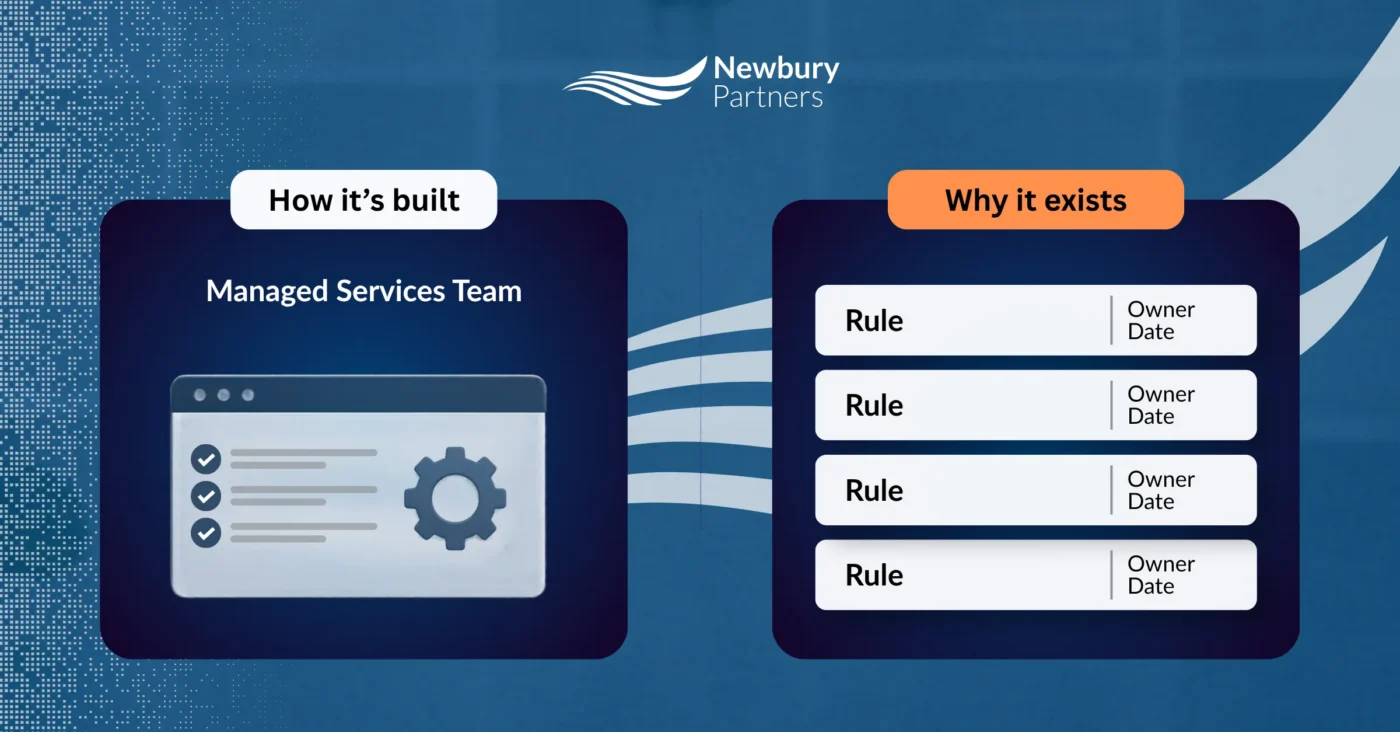
A standing amount works like any other operating line: set once a year, spent monthly, reviewed quarterly. Size it to a backlog the owner can defend, not to last year’s emergencies. Support keeps the system working; improvement changes what it does, and the two are not the same thing. Whether an internal admin, a partner on call or a managed services team does the work, the amount and the owner stay put.
3. One quarterly report
Close the loop each quarter: the owner reports what shipped, what moved up or down the backlog and why, and what the next quarter’s work is. A quarterly business review is the natural place for it. The report replaces an annual argument with a running record, which is what a CFO needs to keep funding the line year after year. A CFO funds what they can read.
Improvement Defaults to a Project When Nobody Owns It
Without an owner, improvement waits until someone is frustrated enough to sponsor it as a project. WalkMe’s 2026 study found digital investment up 38% in a year, with 40% of that spend underperforming. Spend that nobody owns after launch is one place that gap can open.
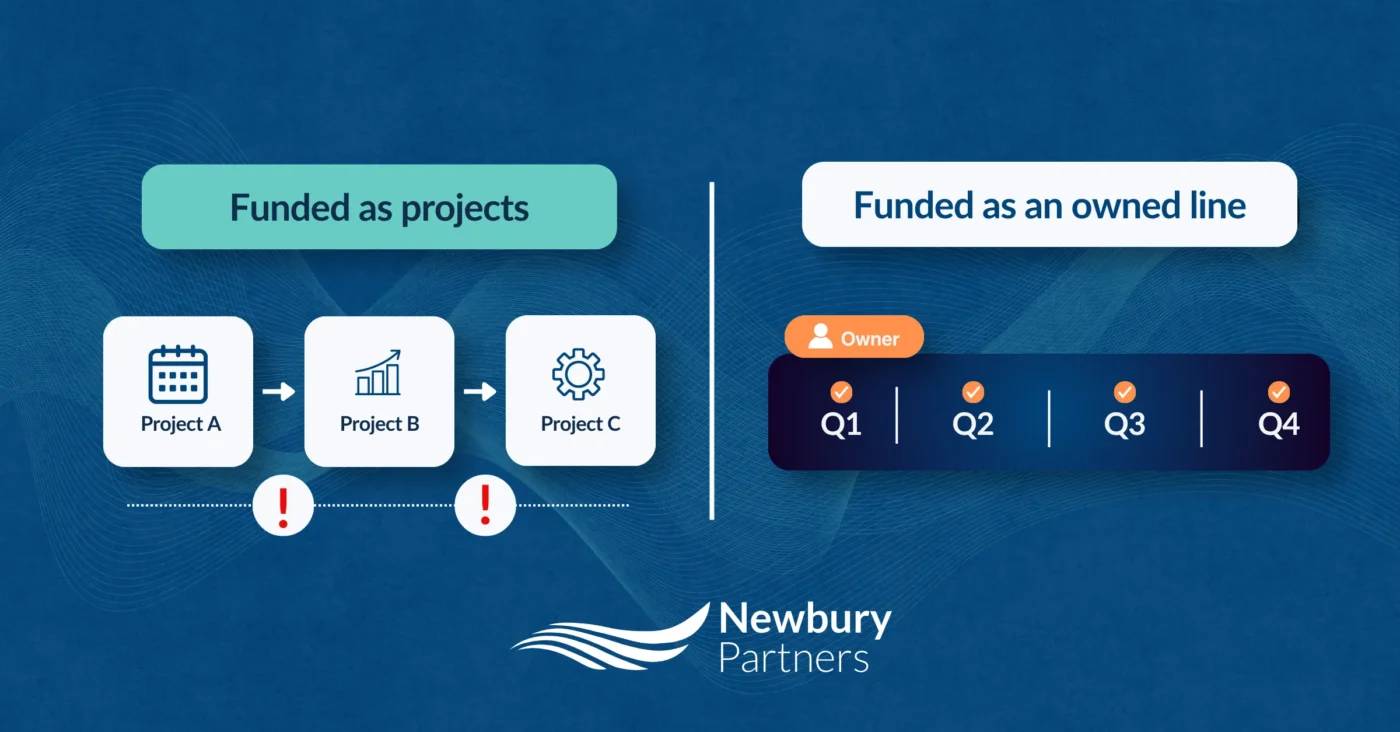
The table compares the two ways improvement gets funded. It is this guide’s illustration, not a client’s budget.
| Question | Funded as projects | Funded as an owned line |
| Who asks for the money | Whoever is most frustrated that quarter | One named owner |
| When work starts | After a request wins its own approval | When it reaches the top of the backlog |
| What the CFO sees | A new request each time | One line and a quarterly report |
| What happens after delivery | The project closes and drift starts | The next backlog item begins |
The project model is not wrong; it fits work with a finish line, such as a new integration or a module install. Configuration on a live ATS does not finish, because desks open, commission plans change and a new division arrives with its own workflow. The setup that fit last spring fits a little less each month. Newbury Partners calls that gap drift after implementation, and a project budget pays for it in bursts.
The WalkMe study spans industries: 3,750 respondents in 14 countries, including 1,700 senior leaders. Staffing firms were not singled out, and we found no figure specific to staffing on unowned upkeep. The direction still applies.
The play worth making first is moving the small fixes. Find last year’s approvals that changed something you already own and put them on the owned line. Here is the math, using illustrative numbers rather than client data. A firm that approved six separate Bullhorn fixes last year at an average of $10,000 each spent $60,000 (6 × $10,000). The same $60,000 as a standing line is $5,000 a month ($60,000 ÷ 12), with one owner ranking the work and one report showing what it bought. That shows the CFO the line is not new money at all. It is old money with a name beside it.
Who would defend your Bullhorn improvement spend in 2027 planning? Ask it at your next leadership meeting. One name should come back. If three people answer, nobody owns it, and the work waits to become a project. Unsure who? Talk through ownership with us.
The 2027 Planning Cycle Is the Place to Make the Change
The 2027 budget cycle is the easiest moment to name an owner, because money is being assigned anyway. In the same Gartner CFO research, 48% of CFOs planned technology increases of 10% or more for 2026. For 2027, make three moves: name the owner, move fixes onto the line, and set the first review.
- Name the owner before requests go in. One executive, with the authority to rank requests from recruiting, finance and operations against each other.
- Move existing fixes onto the line. Requests already drafted as separate projects come off the project list and join the backlog, unless they have a real finish date.
- Set the first quarterly review. Put it on the calendar before the year starts, with the CFO in the room.
Once the owner is named, let the system keep the record: date each request as it arrives, show the backlog in rank order and flag the next review. What moves up the list stays the owner’s call.
If your 2027 technology requests are already drafted, count the Bullhorn fixes listed as separate projects. They belong on one line with one owner. Every separate approval is a line a CFO will question again next year. Second read on the Bullhorn items? Compare notes with us.
What Numbers Should the Owner Bring to the CFO Each Quarter?
The owner should bring three numbers each quarter: line coverage, backlog age and changes in use. Each one is countable from the backlog itself, with no ROI model needed. No public benchmark sets targets for any of the three, so the first count becomes your baseline. Read the three together, because each alone can mislead.
Line coverage is the improvement requests approved through the owned line, divided by all improvement requests approved that quarter, including any that won their own project approval. Backlog age is how long the oldest open request has waited. Changes in use is the share of last quarter’s shipped changes that the people they were built for now use in daily work. To count it, ask each desk lead, or check the field or workflow’s usage in Bullhorn. Count last quarter’s approvals today to set a starting line, and set your own line for healthy from it.
- Coverage high, backlog aging. The line is the route, but the amount is too small for the list or the ranking is stuck; bring a reordered list or a case for more.
- Coverage low, backlog fresh. Work is still being approved around the line; ask why each bypass happened.
- Coverage high, changes not in use. Work ships but does not land; put training on the backlog with the same weight as configuration.
- All three at or better than the baseline for two quarters. The line is working, so keep the report short and let the backlog speak.
Frequently Asked Questions
What is the difference between Bullhorn support and improvement?
Support fixes what is broken so the system keeps working: a failed integration, a locked user, an error message. Improvement changes what the system does so it fits how the firm works now, such as a new workflow, a cleaner field set or an automation. A firm can pay for one without the other.
How often does Bullhorn release updates?
Bullhorn’s 2026 release notes are numbered by month, such as 2026.8 for the August release. Plan reviews around what each release contains, and put the features worth turning on into the backlog.
How big should the standing amount be?
Start with what you already spent. Add up last year’s separate approvals for Bullhorn fixes and workflow changes, then divide by 12 for a monthly line. Adjust it once the owner has ranked the backlog and can show what the amount does not cover.
Should a staffing firm hire an internal Bullhorn admin or use a managed services team?
Either can work. The choice is about coverage and depth. An internal admin knows the firm well but is one person, with vacations and turnover. A managed services team brings more disciplines but needs someone inside the firm to direct it. Whichever you choose, keep the budget owner on your own staff.
Why does technology spending underperform after launch?
One likely reason is that the purchase had an owner and the upkeep did not. After launch the work splits across people who each own a piece. Nobody ranks the requests, and fixes arrive as separate approvals. Adoption needs the same planning as the purchase.
Improvement Needs an Owner Before It Needs More Money
Technology budgets are rising, but more money does not fix a line nobody owns. Firms that keep Bullhorn current name one owner, fund a standing amount and read a quarterly report. Start with the name.
Which executive owns the line, and how much it holds, is your firm’s call. Newbury Partners’ Navigator managed services carry the work itself: monthly optimization, training and adoption, a monthly report and a QBR with executive review. Navigator sits within Newbury Partners’ wider staffing technology services. If nobody on your leadership team can name who owns Bullhorn improvement, start with a conversation.
References
- “Staffing Industry Seeing Growth for First Time in 3 Years.” Staffing Industry Analysts. Published September 2, 2026. Verified live November 11, 2026.
- “Gartner Research Reveals CFOs’ Budget Plans Prioritize Growth Functions, Technology and AI in 2026.” Gartner. Published February 10, 2026. Verified live November 11, 2026.
- “Gartner Survey Finds Rise in Business Technologists Is Driving Funding for Tech Purchases Outside of IT.” Gartner. Published April 13, 2022. Verified live October 26, 2026.
- “2026 Release Notes.” Bullhorn Knowledge Base. Undated. Verified live November 11, 2026.
- “2026 Applicant Tracking System Usage Report.” Bullhorn. Published June 5, 2026. Verified live October 26, 2026.
- “Enterprises Lose 51 Workdays per Employee to Technology Friction Annually Despite Record AI Investment.” WalkMe. Published April 9, 2026. Verified live October 26, 2026.